

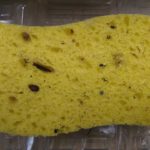
The best laugh I enjoyed of Spring Break was when I couldn’t get a group of teens and tweens to stop washing the library tables. “Seed Sponges” was the name of the Nature to You program, and the moist sponges were indeed a material I supplied as a model for traits of good garden soil. It was at least the 10th time I had guided library patrons in this funny way of planting seeds. Never before had the delight of using the sponge for its more normal purpose put such a pause on the planned gardening lesson. I love the diversity of learning and experiences that arises in my role of Library Presenter. In one Spring Break week, I taught in five public libraries representing a cross-section of Pima County people and places.
Kids and adults drive learning
On Thursday, the most playful day, many of the kids were storytime regulars who bound in each week to play in a cardboard house and enter a raffle for a prize from the librarian. In addition to spontaneously washing tables, they dug deep into my bucket of soil for sensory learning and kept up a barrage of questions about plants.
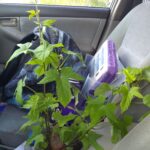
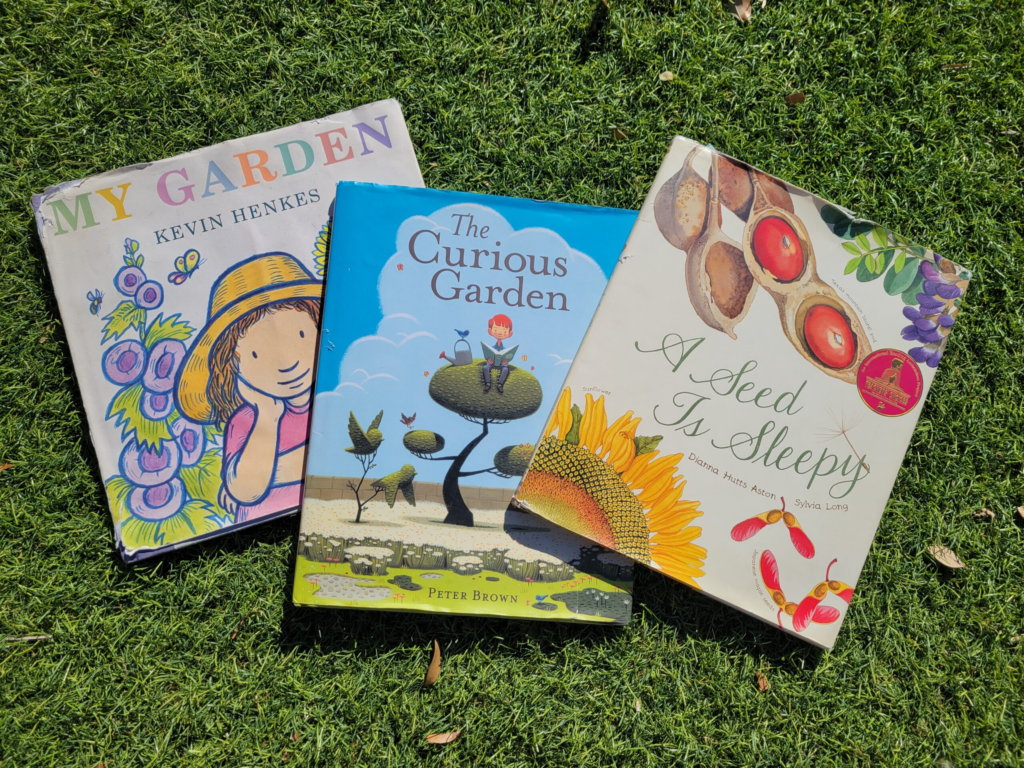
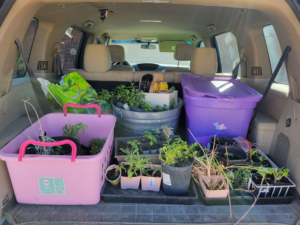
On Wednesday morning, in contrast, toddlers and preschoolers sat securely with their caregivers. The little ones did soak in the story, but planting instructions went more to the appreciative adults as guides. It was a full “house” of families in the shaded yard adjacent to the library’s children’s section. One little girl stood out by standing right by the _My Garden_ read-aloud and responding earnestly to every prompt. Tuesday’s attendees were all adults. They were a small group with a voracious appetite for how to grow food. Options available to take home ranged from sweet potatoes in jars to broccoli in trays to basil in pots. A precocious preschooler, and a mom determined to stretch her income to feed her family, were each powerful forces at different libraries.
Outdoor space
Modern and remodeled Pima County Public Libraries increasingly have dedicated outdoor program spaces. Where outdoor programs weren’t envisioned in older designs, determined librarians and this Library Presenter find a way to include nature as a co-teacher. The most natural setting of my Spring Break programs was in weed-studded dirt under a gigantic eucalyptus tree on Wednesday afternoon. The setting was a necessity based on lack of indoor meeting space, and one I have successfully used before. Blankets on the ground and a pop-up shade tent added just enough comfort for a fun group of elementary-aged kids and their caregivers. The story was _The Curious Garden_ , about plants and gardeners spreading across a city. Naturally, kids were curious about the weeds at our feet. The popsicle sticks I brought as plant labels became bulldozers making roads in the dusty ground. Nothing fancy, lots of eager planting and learning.
The fancier libraries are encouraging in different ways. A comfy carpet of artificial turf bordered by benches and a decorative wall accommodated families on Wednesday morning. A roomy patio with stunning views of the Catalina Mountains was perfect for projects on Friday. Unseasonably high afternoon temperatures on Tuesday and Thursday did lead me to teach indoors even where impressive raised garden beds or a lush courtyard are options I have used in previous years. Whether I bring nature in or incorporate outside nature, libraries lend themselves to teaching gardening.
Language learning
As babies and toddlers listen to a story from the comfort of a parent or grandparent’s lap, they associate words and stories with safety. Gardening storytime is a variation on a time-tested tradition of growing future readers and current relationships. Older children are more engaged in the story details: chocolate bunnies and humming butterfly wings; seeds that fly and seeds that get pooped out by bears; wondering where Liam will go and how a tree is shaped like an elephant. If a volunteer bakes brownies to entice them in first, or families arrange to meet up at Peter Piper Pizza afterwards, I’m still thrilled that kids got to practice their imaginations and pick up some new vocabulary at the library.
Gardening programs at the library help adults learn language too. A young adult asked to come in to a kids’ activity, because she wanted to practice her English. She worked on names of seeds I brought, the name of the whale toy someone dropped on the floor, and conversational skills by directly asking me questions. I worked on slowing down and making use of visual aids. A number of parents likewise speak English as a second language. Learning about and growing plants with their children is a way to practice language themselves plus teach the value of learning. The plants and soil and seeds to touch and see help us all understand each other and bridge language gaps.
Even for participants with fluent English, learning the names of plants is a great way to expand vocabulary: Mexican evening primrose, rosemary, firewheel, sweet alyssum, sweet potato, broccoli (one of the hardest words for me to spell!), and moringa (one of the most fun to say!) are just a few of the plants or seeds that traveled to my Spring Break library programs.
A natural fit – for free!
My own roots in libraries go back to childhood in Mesa. In addition to the prized stack of books I could borrow, I remember the feel of wooden puzzles on the children’s library tables, and the taste of ice cream on the way home. When a shiny new branch opened near our house, the pillows inside and the park outside were both positive draws where I also learned how to research and write. It is with joy that I brought my own children to multiple library locations in Pima County and envisioned leading programs someday.
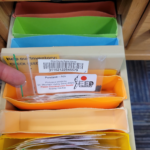
Library Presenting became a natural fit: Nature to You sprouted around the same time Pima County Public Libraries were creating the Seed Library and seeking gardening programs. Any library patron can check out seeds for free, join a vibrant community for free, grow literacy skills for free, and grow their gardening literacy for free. As I write this in April 2026, Spring Break is already a weeks-old memory. I look forward to making, and helping others make, many more healthy memories in our local libraries.