
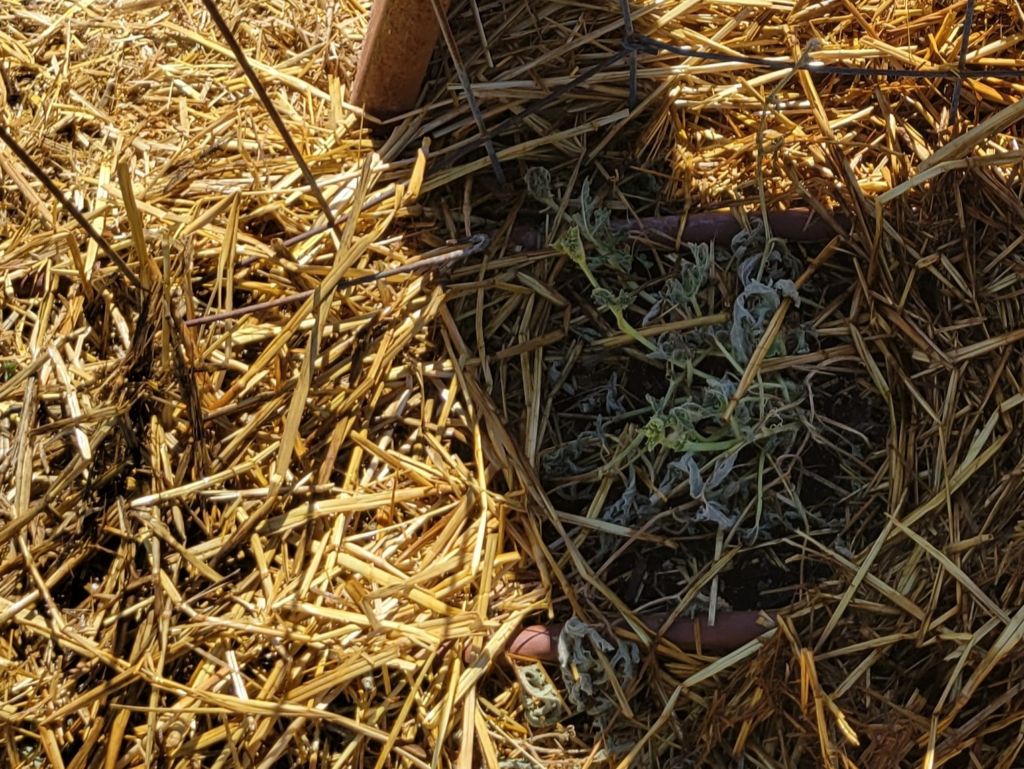

I was crushed. The sun was low, and a breeze made being outside on this Juneteenth evening tolerable. But my garden was drying up FAST. The sunflowers that I expected to make bouquets of were droopy and sad. The luffa that was vining boldly across the garden bed for the past month had suddenly retreated. And were the three watermelon plants in Plot #1 even alive? Respectively no, maybe, and yes but drastically smaller. Despite earlier success planting for Summer 2026, and a glorious monsoon storm just days earlier, my garden and I were now stressed. I re-joined the Parks & Rec event I was attending, picked delicious fruit from the orchard and vineyard, and enjoyed the company of other gardeners – some with enviably lush plants. And chose to put the problem aside temporarily.
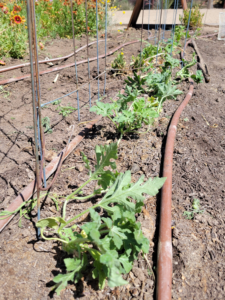
Watermelon, of course, takes a lot of water. Living in the desert, and originally trained in desert ecology, I lean towards growing other options. This same bed has flourished in the past with Tohono O’odham devil’s claw, Armenian cucumber, and African horned melon. “Grocery store” canteloupe and Chimayo melon previously managed in the neighboring bed. For several reasons, I thought 2026 could be the year of successfully growing watermelon after class participants eagerly chose the seeds: I had amended the soil; I had planted seeds early (February) then supplemented with strong store-bought starts (April); the latter variety was recommended for our local environment; and these vines were robust as recently as mid-June. Was that night of discovering crispy plants just a set-back, or the end of this year’s watermelon-growing efforts? And how much work should I invest in rescuing one row of plants, while balancing other demands for my time?
One reason I decided to up my effort is that the challenged beds are in the Marana Community Garden for the purpose of teaching. I had just that week submitted the calendar for the fall series of All-Ages Gardening for Marana Parks & Rec. With that metaphorical carrot, I became determined to rescue the stressed-out watermelon. Like a lot of gardening, this was also a tangible problem that I prefer to some in the wider world over which I have less control.
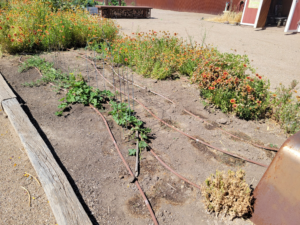
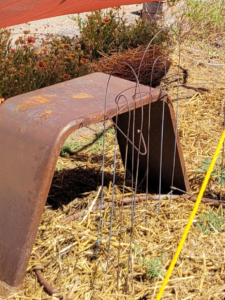
Step 1: Come back on Monday afternoon to re-assess after Friday’s observations. Two of the watermelon plants and all the adjacent luffa plants (in the same Curbubit family) were still alive, so there was still a point in trying to help them rebound. My biggest question was whether the irrigation was working at all. Even though the ground was quite dry, and I know the old tubes are less efficient than in years past, I did feel moisture under the dripper tube holes. An even better clue: the ground was visibly moist in the SHADE of a small bench at the end of the bed.
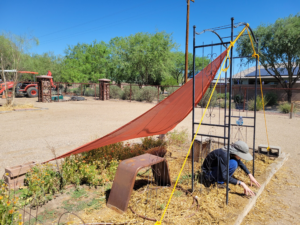
Step 2: Add some shade, any shade (See title image.). I moved two benches to just west of both the watermelon and luffa patches, casting small but solid shadows on the remaining plants. I gathered straw from the Community Garden’s freebie bales, and quickly spread it around and under the branches of vines to shade the soil and roots. The goal was to retain what little water was being artificially dripped their way in between monsoon storms. (I had not mulched earlier in the season in preparation for mud play activities scheduled the second week of June.) I looked around the Community Garden some more. Beds with an awning of some sort all had perkier plants than those that did not. Now that believed I could do something for my plants, I was less stressed.
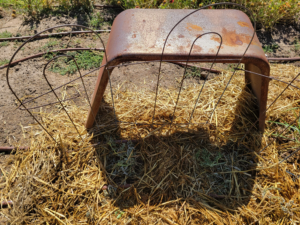
Step 3: Gather available materials, and spend some money. Plot #2 at least has the tired sunflower stalks to provide filtered shade, but the open rows of Plot #1 were completely exposed to the sun and wind. I practice low-budget and re-purposed-materials gardening to a fault, so artificial shade was a need asking to be met for many years. On Tuesday, I searched three thrift stores, my own backyard, and finally Ace Hardware. I ended up with a used arbor and two new shade sails.
Step 4: Set up one shade sail on Tuesday. A stack of bricks from the garden’s share pile provided two low anchors, and the arbor the top third. The wind and mid-morning heat were challenging, because putting up a shade is an ironically sunny job. After about an hour, my watermelon and luffa vines had a floppy, but functional, shelter from afternoon sun to come. Coming in the morning also made a difference to my mood, because sunflowers at least start the day more perky than what I had seen at the end of that previous Friday.
Step 5: Return to check rescue results on Thursday. Success so far! The shade sail held, AND watermelon vines had begun to re-grow in Plot #1! I decided to use the second shade over a separate watermelon patch in Plot #2. These plants had been struggling from the beginning, first sprouting in March but stunted by both an irrigation break and the unseasonable heat wave that marked Rodeo and Spring Breaks. I attached this shade to three different waist-hight fence posts and will just unhook a corner when I need to walk the garden path.
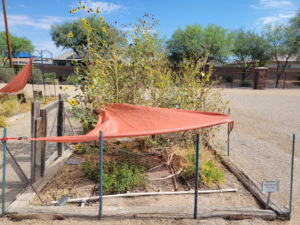
Step 6: Tighten things up the following Monday. A week and a half after discovering a summer garden crisis, I put finishing touches on the shade AND witnessed more re-growth on the plants. How grateful I was for some help, too. I had brought better rope, and my son who handily tied it on correctly. Together we better buried the arbor posts, and added more straw mulch around plants in both Plot #1 and Plot #2. Last, I repositioned irrigation tubes to maximize the number of holes dripping around the watermelon and luffa vines.
Will these rescue attempts work? I’ll post an update by Fall 2026. Back at home, now at the begnning of July, I am thankful for the shelter my house provides for people inside during the hot day, and better appreciate that my plants need shelter too. In fact, watermelon vines are currently lush and successfully setting fruit in an east-facing raised bed in my backyard – and importantly get full afternoon shade from the house. I will continue to favor desert plants that don’t need quite as much coddling. I will also continue to learn how to minimize stress for both plants and the people who care for them, even if that takes work along the way.