
After bursts of intense effort, over half a year of patience, and a strong dose of hope… I learned this was not my summer for watermelon after all.
“I’ll post an update by Fall 2026,” I promised in my July 2 blog about attempts to save plants struggling under direct sun and inadequate irrigation. By August, the April starts had all died. One sugar baby watermelon plant from February seeds survived. It had new growth, even flowers, so I thought I could show off fruit by October. Nope. As late early November, I’m still admiring that stubborn but stunted, fruitless plant. I also didn’t want to leave my readers hanging. My gardening strengths remain in discovering, growing, and promoting desert champions. Instead of watermelon, for Summer 2026 luffa and Reventador corn take that title!
Luffa
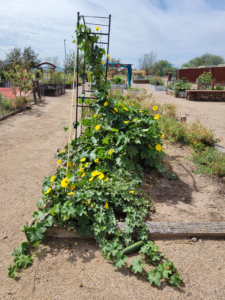
The luffa starts planted in April took over the trellis, sprawled onto the path, and produced dozens of large green fruit. As of this week, a dozen of those are now dry or drying, just as desired. What is a luffa, and why am I now proud to share its success?
Luffa is in the same family as squash, cucumbers, and melons. It is especially fibrous. So it makes a fresh-smelling, environmentally sustainable, and surprisingly satisfying sponge! I’m using mine to scrub dishes each night. Food chunks and smells rinse out better than from synthetic sponges. After I wore the first one out, I replaced it from the stash created from a bountiful first harvest. You can eat the early green fruit if you wish, but I’ve been rooting for the tool I can actually grow in the ground.
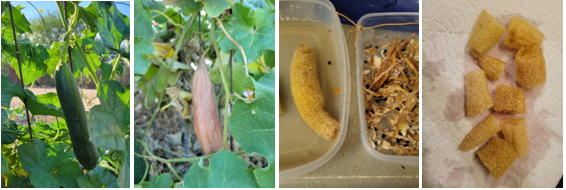
I had first tried growing luffa at home in a sandy rain garden, where it overwintered from ’25-’26 and therefore produced fruit earlier than in the Marana Community Garden. So in September, I brought processed sponge samples and a newly picked specimen to Marana Parks and Rec’s “A Taste of Gardening” Class. Adults and kids cooperated to wash the skin off and remove the seeds. They agreed it was both easy and fun, and took home a functional sponge as well as seeds for spring or monsoon planting. The thriving vine in front of us added an ambience of cheerful yellow flowers and visiting pollinators, promise (now fulfilled!) of more sponges and seeds, and an illustrative contrast to the adjacent space where watermelon tried. 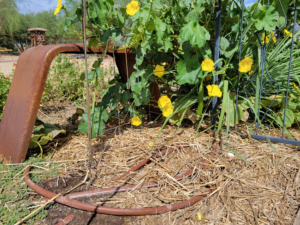
Whether or not you were a student in September, you may well get to share in the wealth at a future Nature to You class. Watermelon is usually prized for juicy flesh, and therefore has a short shelf life. Luffa? Part of its value is in storing well when dry.
Corn
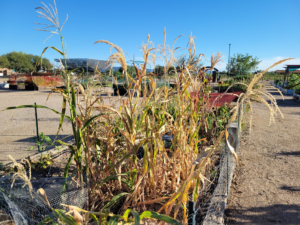
Corn is a summer plant many are more familiar with than luffa. In late July, to take advantage of Southern Arizona’s second warm season planting window, I prepared a patch of soil in the back corner of Nature to You Plot 2. I planted seeds of corn, beans, squash, and sunflowers. The indigenous 3 sisters, plus the 4th sister also endemic to North America. A historically and nutritionally sound mix of plants. Notably, the corn variety was locally sourced from Native Seeds/SEARCH, and the beans I had saved from my backyard 5 years earlier. The squash and sunflowers were of thirstier varieties. This was not a controlled experiment, but I do try to notice the variables. 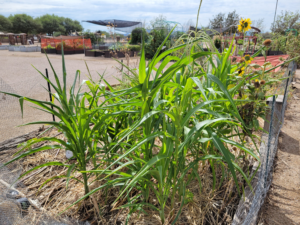
All sprouted! The mammoth sunflower sprouts were quickly eaten by garden critters. (Though successive planting in several other patches did produce flowers before and since.) The corn grew tall, while the squash and beans stayed short, not sprawling or climbing…
Revantador corn, a desert-adapted variety of popcorn, kept growing. The corn patch p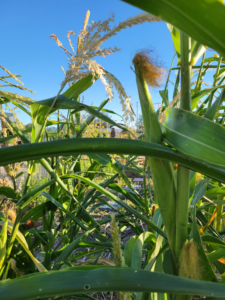 ut on a spectacular show of silks and tassels, mesmerizing movement in the wind, and, by early October, sturdy ears forming on all the plants. The density of about 20 plants in as many square feet contributed to successful pollination. Average monsoon rainfall, sporadic supplemental irrigation, and amended raised rows protected by a layer of straw from the start, were adequate conditions for these plants – but apparently not for yellow crookneck squash or rattlesnake beans. The latter have been winners at home in the past, but have a track record of prior struggles in the denser ground of the Marana Community Garden. To be fair, I’m stubbornly using older in-ground beds while other gardeners have upgraded to raised bed with newer irrigation and better balanced soil. The corn’s success was all the more celebratory because I learned it could beat the odds.
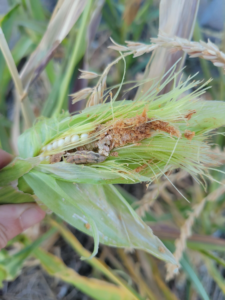
I still almost lost the corn! In mid-October, an evening check on the garden turned into a squealing surprise. I noticed holes in the husks of some ears, picked an ear and pulled back it’s protective covering… A corn earworm (really a pudgy, striped caterpillar) was eating the mature kernels. I watched, both startled and fascinated. What to do? Many of the ears were not ready to pick, either too thin or mature but needing to dry. But if I left them to finish on the stalk, surely the crop would be gone even before my class scheduled for a few days later. I snapped some pictures. Then snapped off the ears that were either most mature or most obviously contained a caterpillar. I speed-husked those ears and removed the offending insect. Handily, just one earworm inhabited each ear. I brought a grocery bag of ears home, cleaned up the salvageable portions, and placed the meager crop in paper bags to dry.
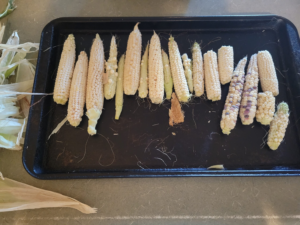 A week and a half later, I harvested everything else. Amazingly, all ears were insect-free! What a joy it was to husk these, admire the successfully pollinated and NOT-eaten kernels, and lay them out on a tray to also dry. This summer, Reventador corn won over its pickier sisters as well as over corn earworms.
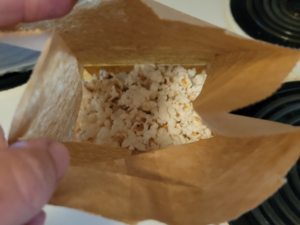
Yes, the popcorn really pops, easily in the microwave with a dash of olive oil. Yes, Kid 2 and I just had a delicious snack! Yes, for growing tools or food in tough conditions, I will focus on discovering and growing more tough desert plants. And I’ll keep advising students to plant a variety of things and plant often, to increase your chance of finding what survives for you and your local conditions.